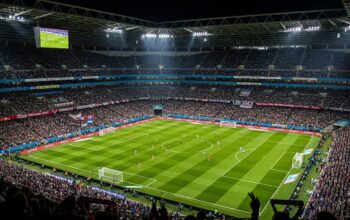

Sports have been an integral part of human culture for centuries. From the earliest forms of physical competition to the modern-day megasport events, they have evolved alongside humanity itself, reflecting changes in society, culture, and technology. What began as simple contests for entertainment and religious purposes has grown into a worldwide phenomenon, influencing economies, politics, and even the very fabric of daily life. In this blog post, we will take an in-depth look at the evolution of sports, exploring their origins, how they’ve evolved, and the enormous impact they have on our world today.
The Origins of Sports: A Foundation in Ancient Civilizations
The roots of sports can be traced back to the dawn of human civilization. Evidence of early physical competitions can be found in the ancient civilizations of Egypt, Mesopotamia, China, and Greece. These societies valued physical prowess for both practical and spiritual reasons. In ancient Egypt, for example, sports like wrestling, archery, and ball games were common, and often tied to religious rituals. Sports were seen not only as a way to showcase strength and endurance but also as a way to honor the gods.
The ancient Greeks, however, are arguably the most influential civilization in the history of sports. The Olympic Games, held for the first time in 776 BCE, stand as a testament to the importance they placed on physical achievement and human excellence. These games, which were held in Olympia, Greece, became a central aspect of Greek culture, and competitors were revered as heroes. The ancient Olympics were held in honor of Zeus, the king of the Greek gods, and were seen as a way to celebrate both physical ability and divine favor. The events, which included running, wrestling, and chariot racing, laid the foundation for the competitive nature of sports that we still see today.
Sports in ancient Greece were not merely about competition; they were a symbol of the human potential. The ideal of a sound mind in a sound body was deeply ingrained in Greek philosophy, and athletic contests were seen as a way to cultivate both physical and mental strength. In the centuries that followed, the idea of using sports to promote excellence spread throughout the Mediterranean and beyond, influencing various other cultures.
The Roman Empire and the Evolution of Public Entertainment
While the ancient Greeks laid the groundwork for organized sports, it was the Romans who took sports to a new level of spectacle and entertainment. The Roman Empire embraced physical contests, but with a focus on grand displays of power and dominance. The most famous Roman sporting events were the gladiatorial games, where fighters (often slaves or prisoners of war) fought to the death in the Colosseum and other amphitheaters. These brutal contests were a form of entertainment for the masses, and they showcased the military prowess and might of the Roman Empire.
In addition to gladiatorial combat, Romans also enjoyed chariot racing, which took place in massive circuses like the Circus Maximus. These races were fast-paced and dangerous, attracting thousands of spectators. Unlike the Greek approach to sports, which emphasized personal achievement, Roman sports were more about mass entertainment and spectacle, serving as a form of political control as much as recreation.
Despite their popularity, the decline of the Roman Empire in the 5th century led to the suppression of many forms of public entertainment. The rise of Christianity, with its emphasis on piety and spiritual salvation, further contributed to the decline of organized sports, especially those that involved violence. It wasn’t until the Middle Ages that sports began to reemerge, though often in a less formalized manner.
The Middle Ages: From Jousting to Folk Games
Following the fall of the Roman Empire, the Middle Ages in Europe saw a shift away from large public spectacles toward more localized and informal forms of physical activity. The Church played a significant role in this transformation, promoting values like humility, piety, and self-restraint, which often conflicted with the violent nature of Roman sports. Nevertheless, physical contests remained a part of daily life, particularly among the nobility.
Jousting tournaments were among the most popular activities for medieval knights, who competed in these events as a way of showcasing their skill and bravery. These tournaments were often held in celebration of royal events or as a form of military training. While jousting was rooted in martial traditions, it also became a form of entertainment for the nobility, with large crowds gathering to witness the action. Similarly, archery contests and other martial-based competitions were common in medieval society.
For common people, folk games like ball games, wrestling, and foot races were popular forms of recreation. These games, while not formalized, were an important part of village life and would eventually evolve into the team sports we recognize today. The practice of football, for example, can be traced back to medieval Europe, where local villages would play a version of the game in the streets or open fields.
While sports during the Middle Ages were less organized than in ancient Rome or Greece, they still played a significant role in fostering community and competition. The medieval period set the stage for the revival of more formalized sports in the Renaissance.
The Renaissance and Early Modern Period: A Rebirth of Physical Culture
The Renaissance marked a turning point in the history of sports. The period saw a renewed interest in the arts, sciences, and physical culture, as well as a return to classical ideals, including those of the ancient Greeks and Romans. This intellectual revival helped shift European society’s focus back toward the importance of the human body and athletic prowess.
During this time, more formalized sports began to take shape. Cricket, for example, emerged in England during the 16th century, while the foundations of modern football were laid in the 17th century. These sports were initially played by the upper class but eventually spread to the masses, paving the way for the development of professional leagues and organized competitions.
The concept of physical education also gained prominence during the Renaissance. Intellectuals like Michel de Montaigne wrote about the importance of physical exercise for both the body and mind. This shift in thinking laid the groundwork for the eventual formalization of sports in the 19th century.
The 19th Century: The Birth of Modern Sports
The Industrial Revolution in the 18th and 19th centuries brought profound social, economic, and technological changes to Europe and beyond. With the rise of mass urbanization, people had more leisure time and disposable income, which contributed to the growth of organized sports. The 19th century saw the birth of many modern sports as we know them today.
In England, football, rugby, and cricket became organized into formal sports with standardized rules. In 1863, the formation of The Football Association in England marked the official codification of the rules of soccer, which would spread across the world. Similarly, rugby, which had originated in the public schools of England, began to formalize its rules and spread to other countries.
The rise of the middle class also meant that sporting events could be organized on a larger scale, with spectators paying to attend matches. This commercial aspect of sports grew in importance throughout the 19th century, and by the end of the century, sports were being broadcast to a wider audience, thanks to advancements in mass media.
At the same time, new sports like basketball and baseball emerged in the United States. Basketball was invented in 1891 by Dr. James Naismith, while baseball had already begun to formalize its rules by the late 19th century. These sports would go on to become national pastimes in the United States, with baseball emerging as a major part of American culture.
The 19th century also witnessed the rebirth of the Olympic Games, which were revived in 1896 by Pierre de Coubertin. This marked the beginning of the modern Olympics, which would become the largest and most prestigious sporting event in the world, attracting athletes from every corner of the globe.
The 20th Century: Globalization and Commercialization of Sports
The 20th century saw an explosion in the popularity of sports, driven by advances in media and technology. Radio broadcasts in the early part of the century brought sports into the homes of millions, and television further expanded the global reach of athletic events. By mid-century, sports like the Olympics, the FIFA World Cup, and the Super Bowl had become major global events, attracting millions of viewers and sponsors.
The commercialization of sports also reached new heights in the 20th century. Professional athletes became household names, and their endorsements turned them into global brands. Stars like Muhammad Ali, Michael Jordan, and Pelé became cultural icons, transcending their respective sports and influencing popular culture worldwide. Television networks and corporations began to invest heavily in broadcasting rights, making sports a billion-dollar industry.
The development of professional sports leagues, such as the NBA, NFL, and MLB, further solidified sports as a cornerstone of global entertainment. With the rise of digital media and the internet, fans could now follow their favorite teams and athletes in real time, no matter where they were in the world.
The 21st Century: Technology, Social Change, and New Frontiers
As we move further into the 21st century, sports continue to evolve at a rapid pace. Technology has become a key player in the world of sports, with innovations like instant replay, wearables, and performance-enhancing data transforming how athletes train and compete. Social media platforms allow athletes to engage directly with fans, while streaming services have made it easier than ever to watch games from anywhere in the world.
Esports have emerged as a major cultural force in the 21st century, attracting millions of viewers and huge sponsorship deals. Competitive video gaming now rivals traditional sports in terms of viewership and prize money, representing a new frontier in the world of athletic competition.
At the same time, there has been a growing focus on social issues within the world of sports. Athletes are using their platforms to speak out on issues like racial inequality, gender discrimination, and climate change. Movements like Black Lives Matter and the push for gender equality in sports have sparked important conversations about the role of athletes in society and their ability to influence change.
Conclusion: The Enduring Legacy of Sports
Sports have come a long way since their humble beginnings in ancient Greece and Rome. From religious rituals to massive global events, sports have evolved to become one of the most influential and powerful aspects of human culture. Today, they bring people together from all corners of the world, crossing geographical, cultural, and social boundaries. Whether it’s the pursuit of excellence, the thrill of competition, or the unity they inspire, sports continue to captivate and inspire billions of people around the world.
As we look to the future, sports will undoubtedly continue to evolve in new and exciting ways. They will adapt to changes in technology, society, and culture, but their core purpose will remain the same: to celebrate human achievement, promote physical well-being, and bring people together. The journey of sports is far from over, and their impact on the world will continue to grow in the years to come.