
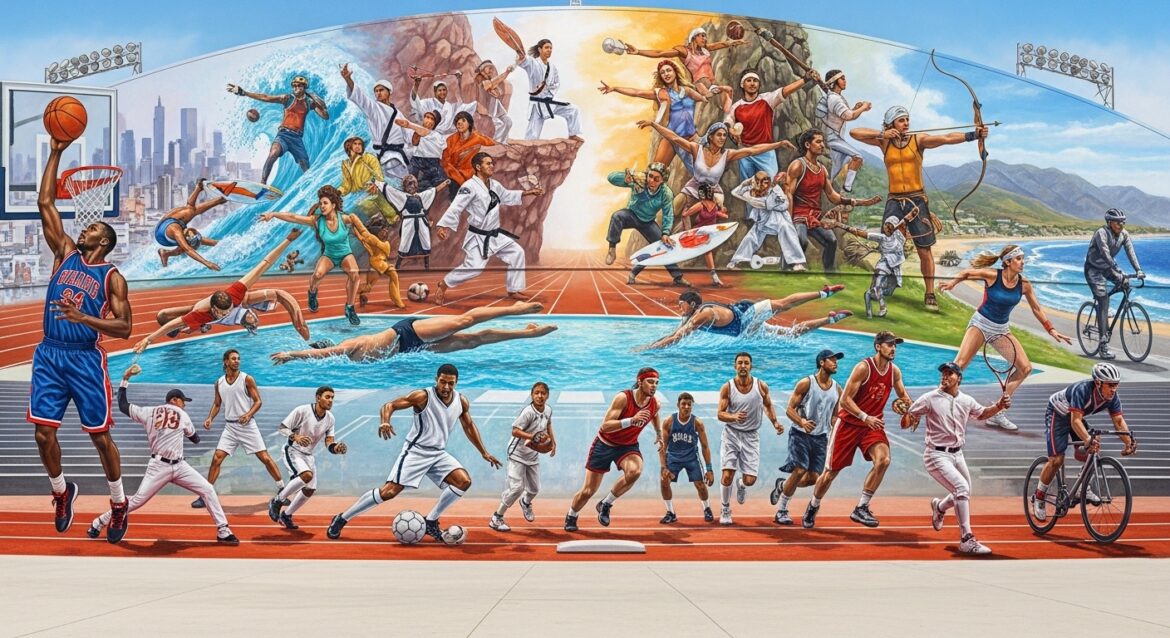
Sports are more than just games. They are a reflection of human culture, history, and society. They have served as a means of entertainment, competition, and even as a platform for social change. What started as simple physical contests for fun or religious purposes has grown into a global industry that unites people, promotes health, and has even influenced politics. In this blog, we will explore the evolution of sports, tracing their origins, how they evolved over time, and the significance they hold in the world today.
The Origins of Sports: Early Beginnings
The origins of sports can be traced back to ancient civilizations. These early forms of sports were often intertwined with religious rituals, military training, and celebration. The earliest forms of competitive physical activity were designed to test strength, agility, and endurance—qualities highly valued in early societies.
One of the earliest known examples of organized sport comes from ancient Egypt. Evidence of athletic competitions in Egypt dates back to around 2000 BCE, with references to sports like running, wrestling, and archery appearing in the art and writings of the time. These early contests were often part of religious ceremonies and were thought to have spiritual significance.
However, the most famous early sporting events were in ancient Greece. The ancient Greeks are considered the pioneers of modern sport as we know it. The Olympic Games, which started in 776 BCE, were held in Olympia in honor of Zeus, the king of the gods. The Games consisted of a series of events, including running, wrestling, and chariot racing. These games not only celebrated athletic prowess but also served as a means of showcasing the values of Greek society, such as discipline, honor, and competition. The Greeks saw sports as an expression of human excellence and believed that physical activity was essential to both the mind and body.
The influence of Greek sports spread across the Mediterranean, with the Romans adapting many of these competitions. However, the Romans added their own twist, often transforming sports into grand spectacles meant to entertain the masses. Gladiatorial combat, chariot races, and staged battles in the Colosseum became some of the most well-known forms of Roman entertainment. These events were often violent and brutal, reflecting the Roman appetite for domination and spectacle.
The Middle Ages: A Shift in Sporting Practices
The fall of the Roman Empire in the 5th century CE marked a significant shift in the development of sports. During the Middle Ages, sports became less formalized and more localized. With the rise of Christianity and the fall of urban centers, there was a decline in the kinds of organized physical contests seen in the ancient world. The Church, which held significant influence over European society, often frowned upon activities that were seen as wasteful or indulgent, including many forms of physical competition.
However, the Middle Ages were not without their own forms of sporting activity. Jousting became a popular sport among the knights and nobility. These tournaments, which featured knights riding horseback and charging at each other with lances, were both a form of military training and public entertainment. The joust, along with other medieval contests such as archery and sword fighting, was seen as a way to demonstrate honor and bravery.
At the same time, common people continued to enjoy various folk games and physical contests. These included simple forms of ball games, running races, and wrestling. While these activities were often informal, they laid the groundwork for the team-based sports that would emerge later in history. These games were an important part of community life and played a key role in the social cohesion of villages and towns.
The Renaissance: The Rebirth of Physical Culture
The Renaissance period, beginning in the 14th century, marked a cultural rebirth in Europe. This era was characterized by a renewed interest in the classics, particularly the ideas and ideals of ancient Greece and Rome. Humanism, a philosophy that emphasized the potential and achievement of the individual, gained popularity, and with it came a resurgence in the importance of physical activity.
During this period, more formalized sports began to emerge, particularly in England. Early versions of cricket, for example, were played in the 16th century. These games, which would eventually evolve into modern team sports, were initially informal and often played in the streets or fields. However, as the Renaissance ideals of individual excellence took root, people began to recognize the value of these games as a means of fostering skill, discipline, and teamwork.
This was also a time when physical education began to be taken more seriously. Scholars and philosophers began to advocate for the importance of physical health alongside mental and moral development. The Renaissance philosopher Michel de Montaigne, for example, wrote about the importance of physical exercise for both the body and the mind. This period set the stage for the more structured approach to sports that would develop in the coming centuries.
The Birth of Modern Sports in the 19th Century
The 19th century saw the formalization and codification of many of the sports we recognize today. With the rise of the industrial revolution and the growth of urban centers, people had more leisure time and disposable income, which contributed to the rise of organized sports. New technologies, such as the printing press, allowed sports to be more widely publicized, and advances in transportation made it easier for athletes to travel and compete across the country and even internationally.
In England, many of the sports that we know today began to take shape during this period. Rugby, for example, was formalized in the 19th century. Rugby football split into two branches: one that would later become American football and another that evolved into association football (soccer). The formation of standardized rules was a key development, as it allowed for greater consistency and fairness in competitions.
Cricket, too, became more organized during this period. In the mid-19th century, the first international cricket match was held between England and Australia, leading to the creation of the Ashes series, one of the most famous rivalries in the sport’s history.
Another significant development in the 19th century was the creation of the modern Olympic Games. In 1896, Pierre de Coubertin revived the Olympic Games in Athens, Greece, and introduced the modern concept of international competition. The Games aimed to bring together athletes from different countries to compete in a spirit of unity and peace, promoting the idea of sports as a means of international diplomacy and cultural exchange.
In the United States, baseball became one of the most popular sports of the 19th century. With its roots in various European bat-and-ball games, baseball began to take shape as a distinct sport in the mid-1800s. The formation of the National League in 1876 solidified its place as a major professional sport in the United States, and its popularity spread internationally over the following decades.
The 20th Century: Globalization and Commercialization of Sports
The 20th century saw the explosion of sports as both a global entertainment industry and a form of mass media. With the advent of radio and television, sports could now be broadcast to millions of people worldwide, allowing fans to follow events and athletes more easily than ever before. Iconic events like the FIFA World Cup and the Olympic Games attracted massive global audiences, turning sports into a significant part of popular culture.
In the United States, sports like basketball and American football gained enormous popularity. The National Basketball Association (NBA), founded in 1946, became one of the most powerful sports leagues in the world. The rise of professional athletes like Michael Jordan and Magic Johnson helped to elevate basketball to a global level, and the NBA became a symbol of American sports culture.
The commercialization of sports also reached new heights in the 20th century. Corporate sponsorships and media rights turned sports leagues into multi-billion-dollar industries. Athletes became global brands, endorsing everything from sneakers to soft drinks. The financial stakes of professional sports grew dramatically, and the gap between amateur and professional athletes became more pronounced.
In addition to the rise of team sports, the 20th century also saw the growth of individual sports like tennis, boxing, and golf. Athletes like Serena Williams, Muhammad Ali, and Tiger Woods became household names, transcending their sports and becoming cultural icons in their own right. Their success and influence helped to elevate the profile of their respective sports and set new standards for what it meant to be an elite athlete.
The 21st Century: Technology, Diversity, and the Changing Landscape
The 21st century has brought even more dramatic changes to the world of sports. Technological innovations have revolutionized how athletes train and compete. From advanced training techniques to wearable technology that tracks performance data, athletes have access to tools that were unimaginable even a few decades ago. Virtual reality, for example, is now being used to train athletes in various sports, simulating real-life competition scenarios.
Social media has transformed the way athletes engage with their fans. Platforms like Instagram, Twitter, and TikTok allow athletes to share their personal lives, opinions, and achievements directly with their followers. This has led to a new level of fan engagement, as athletes can connect with millions of people on a personal level, transcending the traditional barriers between celebrities and their audiences.
One of the most significant trends in modern sports has been the increasing emphasis on diversity and inclusion. Women’s sports, in particular, have gained more visibility, with stars like Serena Williams, Simone Biles, and Megan Rapinoe becoming champions for gender equality in sports. Additionally, movements like Black Lives Matter have brought attention to issues of racial inequality, with athletes using their platforms to speak out on social and political issues.
In the realm of esports, competitive gaming has exploded in popularity, attracting millions of fans worldwide. What began as a niche hobby has now become a global industry, with esports tournaments filling arenas and offering multi-million-dollar prize pools. This shift has opened up new career paths for young gamers and has blurred the line between traditional sports and video games.
Conclusion: The Ever-Evolving Impact of Sports
Sports have undergone a dramatic transformation from their ancient origins to the present day. What began as simple competitions for religious and cultural purposes has evolved into a multi-billion-dollar global industry that unites people across cultures, fosters individual and team excellence, and serves as a platform for social change.
Today, sports continue to have a profound impact on society, shaping everything from entertainment to politics. The future of sports is bright, with new technologies and innovations promising to redefine how we experience and interact with sports. Whether through the rise of esports, the empowerment of female athletes, or the continued commercialization of traditional sports, one thing is certain: sports will remain an essential part of our collective human experience for generations to come.