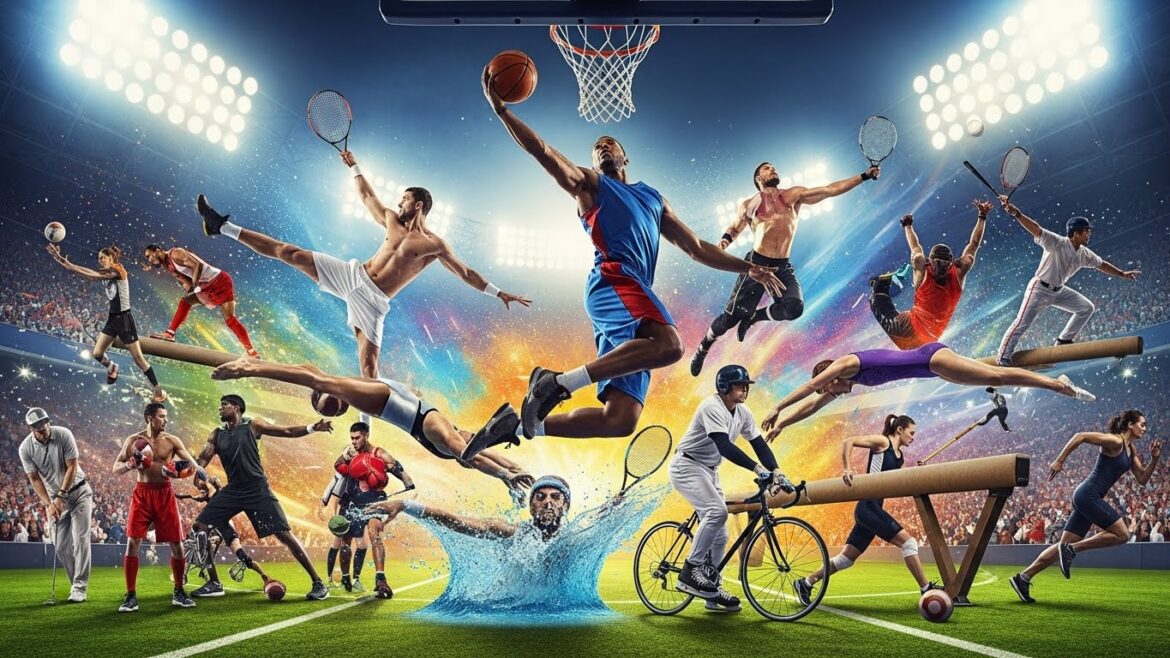
Sports have been an integral part of human history, evolving alongside civilizations, adapting to cultural shifts, and providing entertainment, social cohesion, and even means for national pride. From the gladiatorial contests in ancient Rome to the worldwide appeal of the modern Olympic Games, the history of sports reflects the development of societies and the universal desire for physical competition, entertainment, and personal achievement. This blog post will delve into the fascinating journey of sports, exploring their origins, transformations, and significance in today’s world.
1. The Ancient Roots of Sports
The origins of sports can be traced back to ancient civilizations where physical prowess and competitive activities were often a means of preparing for war, displaying strength, or honoring the gods. Ancient Egypt, Mesopotamia, and Greece all engaged in various forms of physical contests, though they were often bound to ritualistic or military practices.
Ancient Egypt and Mesopotamia: While the Egyptians were known for their monumental architecture and advancements in other fields, they also had a deep love for games and sports. In their tombs, depictions of games like wrestling, archery, and running appear frequently. Similarly, the Mesopotamians practiced ball games, hunting, and chariot racing.
Ancient Greece – The Birthplace of the Olympics: However, it was Ancient Greece where sports began to take on a form we recognize today. The Greek ideal of “arete” (excellence or virtue) was achieved not only through intellectual pursuits but also through athletic prowess. The Olympic Games, held in Olympia every four years, were central to Greek culture, uniting city-states in a peaceful competition. These games were dedicated to Zeus, and the winners were hailed as heroes, receiving crowns of olive leaves and lasting fame.
The ancient Olympic Games featured a range of events, including foot races, chariot races, and the pentathlon, which was composed of running, long jump, discus, javelin, and wrestling. These early competitions laid the foundation for the sports we know and love today.
2. The Role of Sports in the Roman Empire
With the rise of the Roman Empire, the nature of sports began to shift from public festivals and religious events to brutal forms of entertainment. The Romans perfected the concept of mass spectator sports with gladiatorial games, chariot races, and various forms of combat sports. The Colosseum in Rome, capable of seating up to 50,000 spectators, became the iconic arena for gladiators to engage in deadly combat, while the Circus Maximus hosted thrilling chariot races.
Sports in Roman times were more about spectacle than individual achievement. Gladiators, often slaves or prisoners of war, fought to the death for the entertainment of the masses, and the empire used these games to distract the public from political issues, as well as to demonstrate the power and might of the Roman state.
However, not all Roman sports were violent. The Roman elite participated in activities like ball games, wrestling, and swimming, which resembled modern sports in terms of competitive nature and athleticism.
3. The Middle Ages: The Decline and Transformation of Sports
Following the fall of the Roman Empire, sports in Europe underwent significant changes. The Middle Ages were marked by political instability, and the emphasis on organized sporting events waned. However, this period saw the evolution of many sports, particularly jousting, archery, and hunting, which were practiced by the nobility. These activities had both a martial and recreational purpose, honing skills necessary for warfare while providing entertainment.
Knighthood and Jousting: One of the most iconic sports of the medieval period was jousting, a tournament in which knights on horseback charged at each other with lances. The competition was a display of skill, strength, and honor. It also served as a way to train knights for battle, with a focus on horsemanship, tactics, and hand-eye coordination.
The Rise of Soccer and Early Football: A lesser-known fact is that the roots of modern football (or soccer) can be traced back to medieval England. The game was a chaotic affair, often involving entire villages and no formalized rules. Known as mob football, these games were rough and violent, with little regard for safety. Over time, these primitive games would evolve into the structured football that we recognize today.
4. The Renaissance: The Revival of Physical Culture
The Renaissance era, beginning in the 14th century, witnessed a renewed interest in physical fitness and human achievement. This period saw the return of the Olympic Games as an idea, albeit in a much more intellectual form. Renaissance thinkers and scholars began to reimagine the human body as something to be trained and perfected, not just as a vessel for survival.
This period also marked the development of early forms of tennis and fencing, which were practiced in noble courts. These activities laid the groundwork for the later establishment of standardized rules and national federations, which would make these sports global phenomena.
5. The Birth of Modern Sports and the Role of the Industrial Revolution
The real revolution in sports came in the 19th century with the Industrial Revolution. This period of rapid urbanization, technological advancements, and economic growth led to the creation of a more structured society, which in turn created the conditions for modern sports to emerge.
The Formation of Organized Sports: As people moved to cities, they sought out organized recreational activities to relieve the stresses of industrial labor. The rise of the middle class also led to the creation of sporting clubs and leagues, providing the structure that modern sports depend on.
Football, Cricket, and Rugby: Modern football (soccer), cricket, and rugby all began to take shape during this period. The first codified rules for football were created in England in 1863, and rugby followed shortly after. Similarly, cricket’s growth was fueled by the British Empire, spreading to colonies around the world. As these sports gained international traction, they became a means of national pride, and the foundations for global competitions were established.
The Role of the Olympic Games: Another milestone in the development of modern sports was the revival of the Olympic Games in 1896 by Pierre de Coubertin. The modern Olympics brought together athletes from all over the world to compete in a wide range of sports, and they remain one of the most significant global sporting events to this day.
6. The Globalization of Sports in the 20th Century
The 20th century marked the rise of global media and technology, which transformed sports into an international phenomenon. Television broadcasts, radio, and the internet allowed sports to reach audiences far beyond their local borders. The development of professional leagues, sponsorship deals, and advertising created a multi-billion-dollar sports industry.
The Growth of Professional Sports: In the United States, the formation of major professional leagues like the NFL, NBA, and MLB turned athletes into global superstars. The world of sports became a business, with players earning vast salaries and corporations investing heavily in endorsements. This shift was mirrored globally, with football becoming the most popular sport in the world, particularly after the creation of the FIFA World Cup in 1930.
The Impact of Technology: The 20th century also saw the development of technology that significantly impacted how sports were played, viewed, and understood. Innovations like the instant replay, advanced training equipment, and digital analysis tools have changed the way athletes train and perform, while also enhancing the fan experience.
7. The Cultural and Social Significance of Sports Today
In the 21st century, sports have become much more than just physical contests; they are a form of entertainment, a source of social identity, and a vehicle for cultural expression. The cultural importance of sports cannot be overstated, as they bring people from diverse backgrounds together, transcending language barriers, national borders, and cultural differences.
Sports and National Identity: International events like the FIFA World Cup, the Olympics, and the Tour de France are opportunities for countries to showcase their athletic prowess on the world stage. These competitions often become moments of national pride and unity, with athletes representing their countries and inspiring future generations.
Sports and Social Change: In recent decades, sports have also become a platform for activism and social change. Athletes like Muhammad Ali, Jackie Robinson, and Colin Kaepernick have used their platforms to speak out on social and political issues, from racial equality to human rights. These acts of protest have shown how sports can be a powerful tool for influencing society and shaping public discourse.
8. Conclusion: The Unstoppable Growth of Sports
Sports have come a long way from their ancient roots, from humble beginnings as rites of passage or religious ceremonies to becoming a global business and a source of entertainment for millions. The world of sports continues to evolve, fueled by advances in technology, greater accessibility, and an increasing emphasis on inclusivity.
In the future, we will likely see even more innovations in sports, from virtual reality competitions to further integrations of AI in training and performance analysis. What remains constant, however, is the universal appeal of sport—the celebration of human strength, skill, and determination. Whether it’s a local amateur game or an international championship, sports continue to unite us in a shared pursuit of excellence.